European Security
Bosnia at Risk. NATO's Role in Stability.
Bosnia sits at the crossroads of history, a nation where war wounds still whisper down Sarajevo’s boulevards, and hope clings to the smoldering embers of a fragile peace. The rivers run deep, slicing through a country divided — Bosniaks, Croats, and Serbs waltzing a delicate dance of coexistence. But the specters of yesterday are becoming increasingly loud, and the question lingers: Will Bosnia rise, or fall into shadow once again?
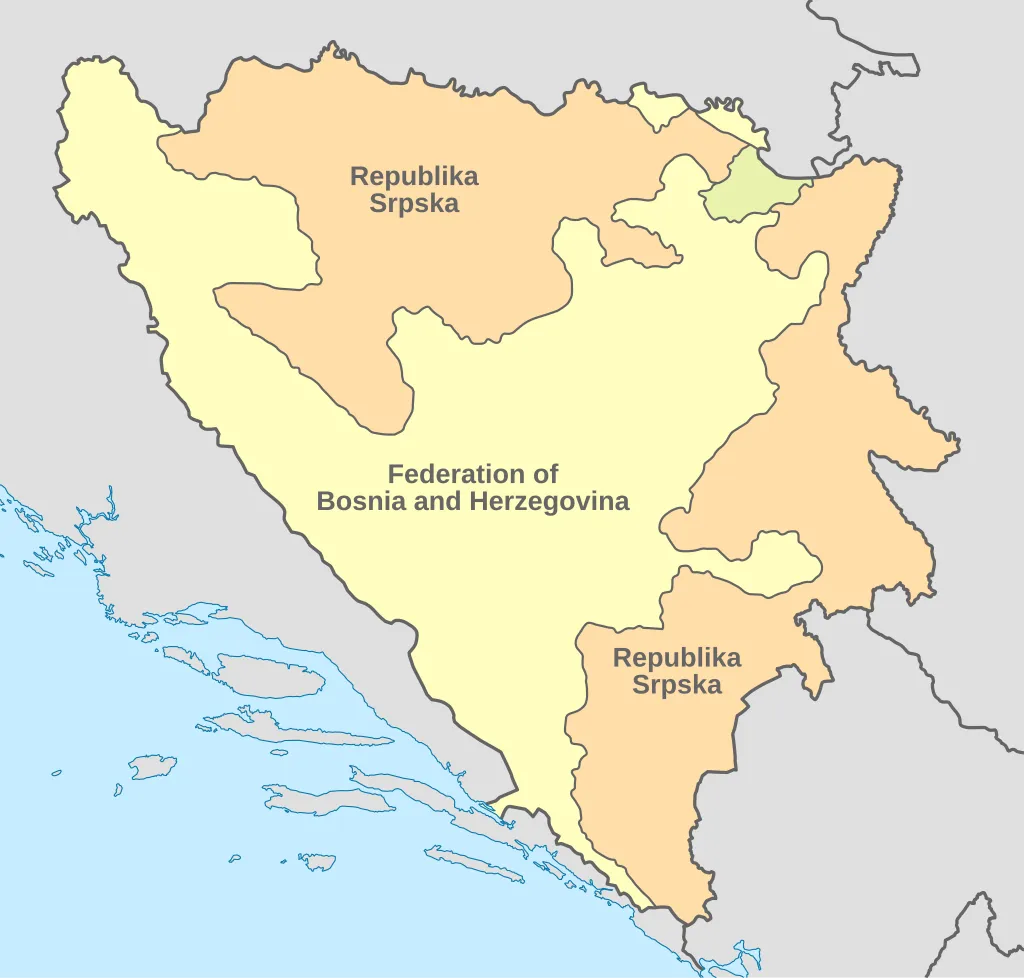
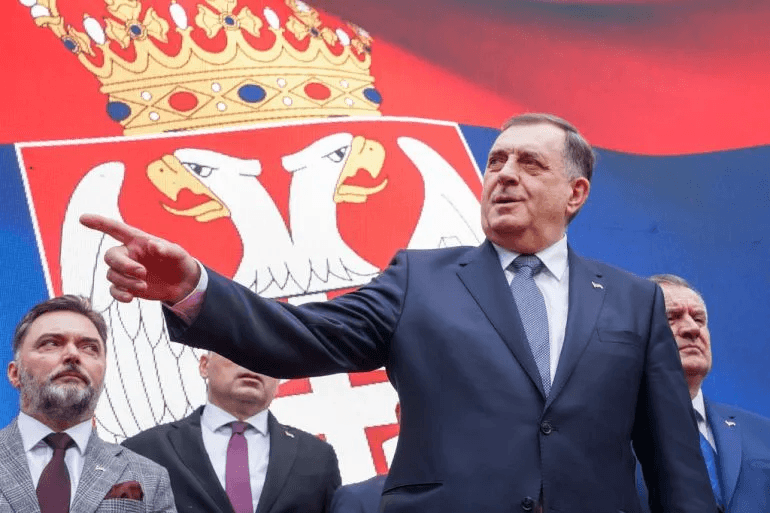
For centuries, Bosnia has been a civilization crossroads, an East-West crossroads, a mosaic of religions and cultures. But also, it has been a battlefield — caught in the tides of empires, from the Ottomans to the Austro-Hungarians, and then, in the brutal collapse of Yugoslavia. The 1990s Bosnian War left scars that would never heal, its dark legacy intertwined in the very fabric of the nation. The world promised “never again,” but today the same toxic forces that destroyed Bosnia earlier are stirring once more. New tensions have cast a long shadow over Bosnia’s fragile peace. Republika Srpska leader Milorad Dodik has openly defied the central government, challenging the unity of the state with secessionist rhetoric and actions. Republika Srpska is one of Bosnia and Herzegovina’s two entities, the other being the Federation of Bosnia and Herzegovina. It was established under the Dayton Agreement and granted significant autonomy within the state. New laws excluding the jurisdiction of the national judiciary and electoral commission are clear attempts to deprive Bosnia of sovereignty. Dodik and other politicians have refused to attend questioning, with Dodik describing the detention order as “a gross abuse of power” at a news conference.
The situation is seen as an effort to secede from Bosnia, evoking concerns from the U.S., the EU, and NATO. The Republika Srpska assembly is discussing a new draft constitution to further their separation process. These moves have stirred fears of potential violence, recalling ethnic conflicts from the 1992 Bosnian war.
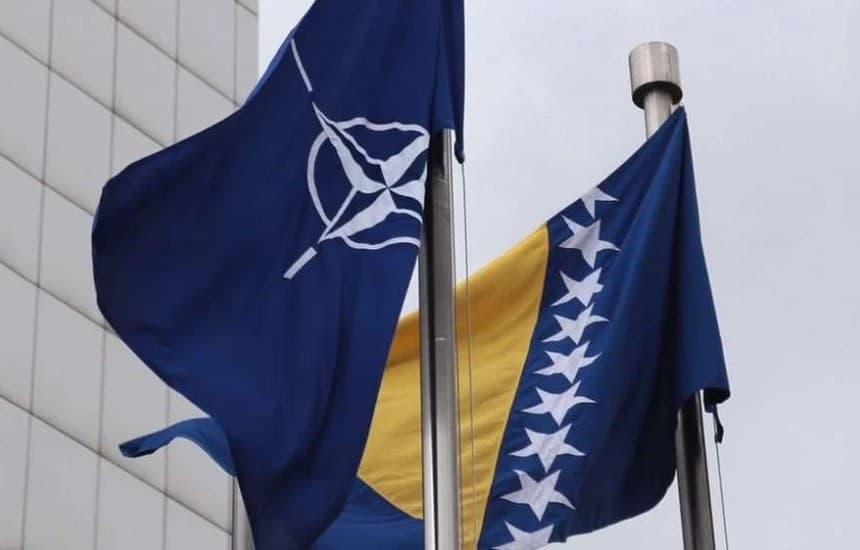
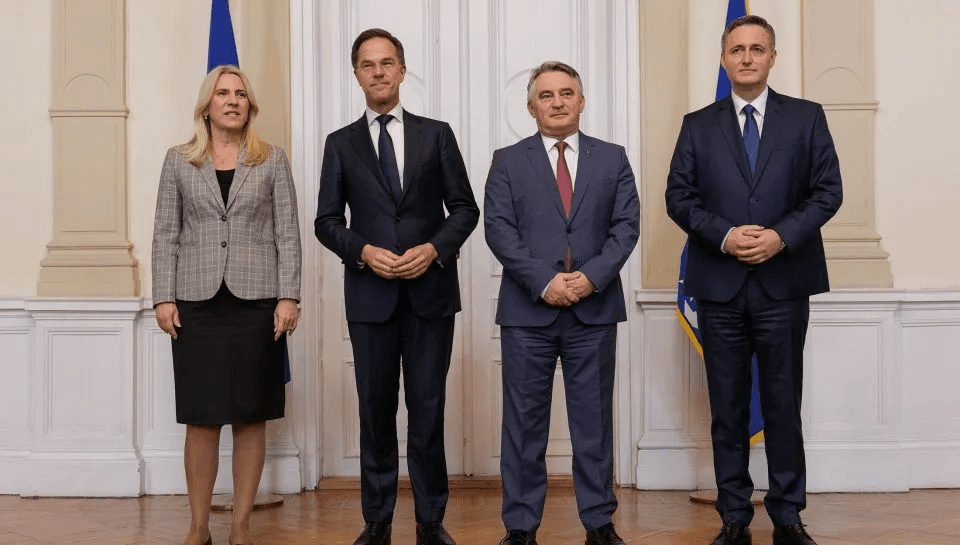
In response to these escalating tensions, NATO Secretary General Mark Rutte visited Sarajevo on March 10, 2025, to reaffirm the alliance’s commitment to Bosnia’s sovereignty and territorial integrity. Rutte emphasized that “NATO remains firmly committed to the stability of this region and to the sovereignty, territorial integrity, and security of Bosnia and Herzegovina.” He underscored that the Dayton Peace Agreement is the cornerstone of peace in Bosnia and must be respected.
During his visit, Rutte held high-level meetings with Bosnian and Herzegovina representatives, including members of the Presidency, the Chair of the Council of Ministers, and the Foreign Affairs and Defence Ministers. He also met with the Commander of NATO Headquarters Sarajevo, the High Representative for Bosnia and Herzegovina, and the Commander of the EUFOR mission. Rutte stressed the necessity of upholding the constitutional order and warned against doing anything that attempts to overthrow it, assuring that those attempts are unacceptable.
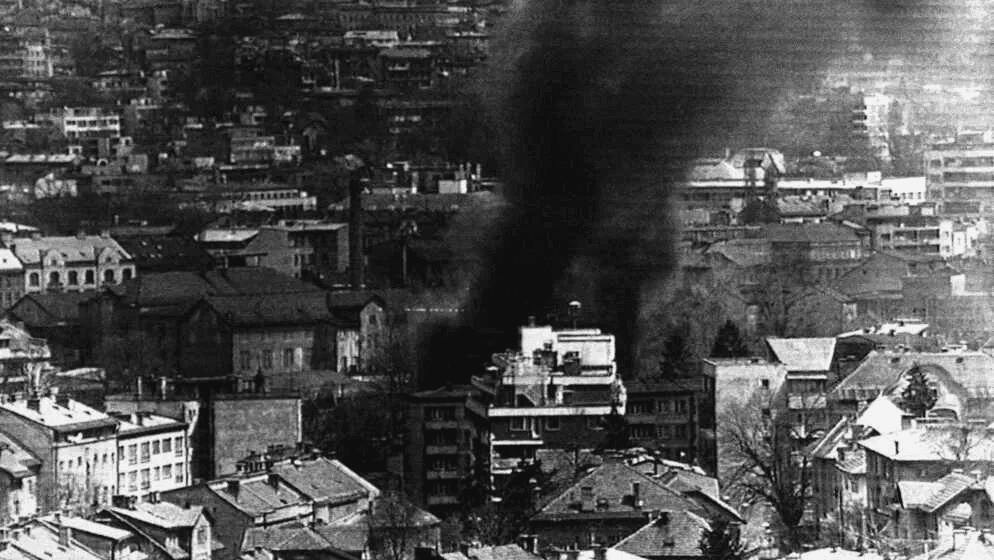
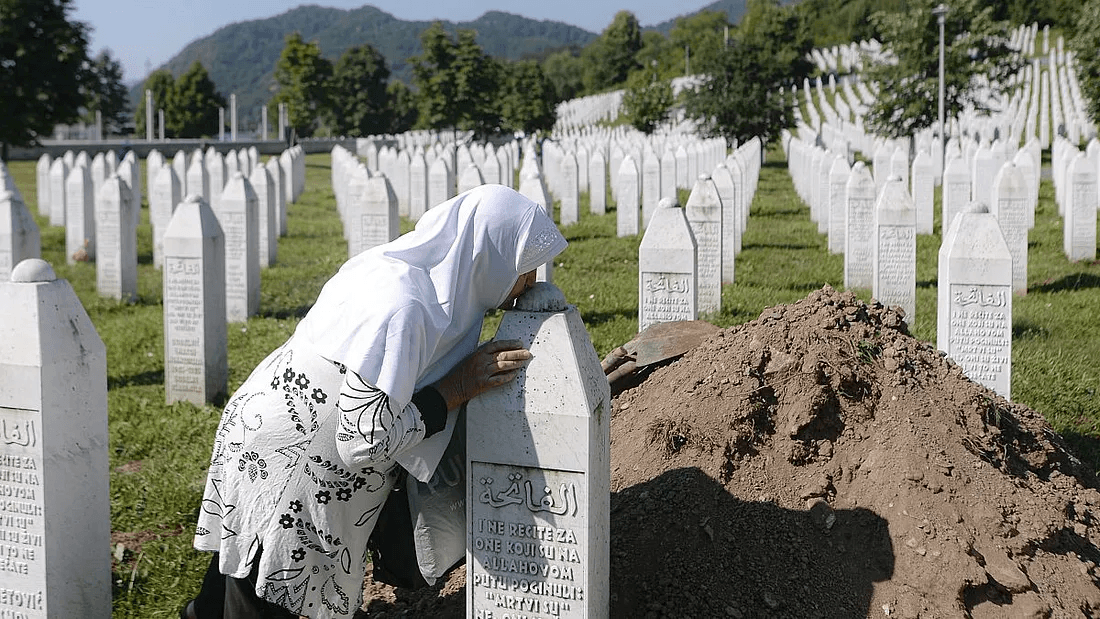
The Dayton Peace Accord, which was signed in the winter of 1995, was a fragile Band-Aid slapped on top of a bleeding wound. It ended the war but not the nation. Instead, it placed Bosnia in a state of eternal suspended animation — two nations, three presidents, countless bureaucratic hurdles. It was peace, yes, but peace balanced on the edge of a knife. That knife now trembles, glinting in the hands of those who would have Bosnia disintegrate once more. The Bosnian War (1992–1995) was among the bloodiest wars in recent European history. It erupted following the breakup of Yugoslavia, as Bosnia and Herzegovina followed the others in their declaration of independence. The war was marked by ethnic cleansing, sieges, and massacres, with over 100,000 killed and over 2 million displaced. The worst atrocity was the July 1995 Srebrenica massacre, in which Serbian forces murdered more than 8,000 Bosniak men and boys in what international tribunals subsequently convicted of being genocide. The capital city, Sarajevo, experienced the longest siege in recent history — nearly four years of continuous around-the-clock shelling and sniper fire. The war produced deep divisions that still persist today.
Nationalism stirs in Republika Srpska, with leaders speaking secession and re-drawing borders with faded ink. Outside fingers probe into Bosnia’s soil — Russia bankrolls division, China stifles dissent, and the West, weary and distracted, sits remote and observes. Ghosts of the 1990s boil beneath, and unless the world remains alert, they will resurface. NATO used to patrol Bosnia, its umbrella of protection against chaos. It imposed the fragile peace, ensuring that the cacophony of gunfire would not echo. But now, as the fighting grows hotter, its guard has relaxed, its watchful eye turned away. The coalition must be rebuilt. The future is uncertain, but this is one thing we can be sure of: Bosnia cannot stand alone. If NATO will not act — if it will not reaffirm its commitment to this land once more in its arms — then history can be made to repeat itself. And the world will again ask the same haunting question that it asked in the 1990s: Why did we wait?
Action hour. The chronicle of Bosnia is still unfolding, but now it is the turn of NATO to help ensure that it doesn’t become an epic of tragedies.